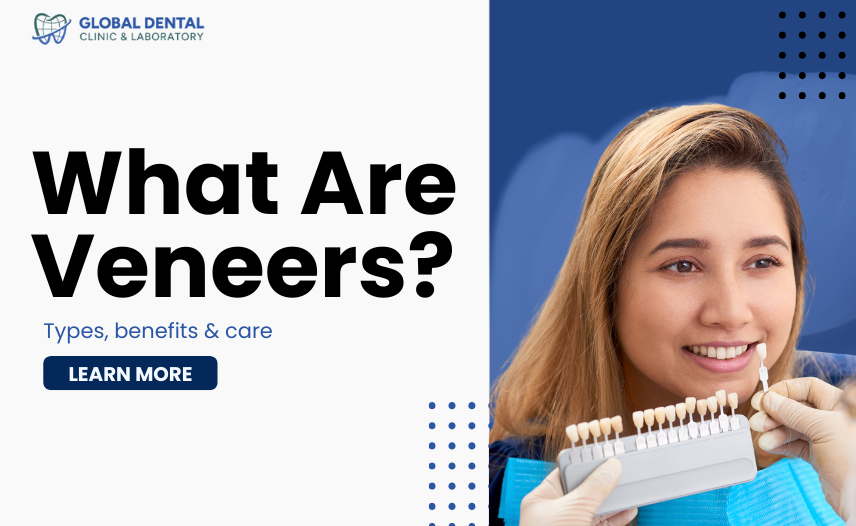
Veneers: What They Are & How They Improve Your Smile

December 8, 2025by admin0
What are Veeners

Most people dream of a bright, confident smile, but dental issues like discoloration, chips, or gaps often get in the way. That’s where veneers come in. 
 

Custom-designed thin shells called veneers are applied to your teeth to correct cosmetic imperfections and enhance your smile. Veneers are used to cover stains, hide chips, close small gaps, or reshape uneven teeth. Many patients get porcelain veneers because they look natural and resist stains better than ordinary whitening treatments. 
 

Even with regular brushing and care, certain issues, such as persistent staining, enamel wear, or minor damage, don’t always respond well to whitening or bonding alone. In such cases, veneers offer a durable, aesthetic solution that combines strength, appearance, and convenience.  
 

At Global Dental, we aim to help you understand exactly what veneers are, who they suit, and what to expect before and after treatment. We believe in honest advice. Veneers can transform your smile, but they also require commitment and proper care for long-lasting results. 
 

Suppose you’re curious whether veneers suit your teeth, especially if you live in Karachi and want a local, trusted dental clinic. In that case, this guide will walk you through everything with clarity and honesty. 

What Veneers Are and How They Work

Ultra-thin veneers made from porcelain or composite resin cover the front of your teeth, creating a naturally polished smile. In addition to enhancing appearance, veneers shield the underlying tooth from minor wear, discoloration, and staining. The dentist carefully shapes your teeth, takes impressions, and then attaches the veneers using a strong dental adhesive. 
 

Porcelain veneers are popular because they mimic natural tooth enamel, resist discoloration, and can last 10–15 years with proper care. Composite veneers, while slightly less durable, offer a quicker, often more affordable option. Both types are designed to fit your teeth seamlessly, giving you a natural, even smile. 
 

At Global Dental, we guide patients through every step: from understanding which teeth can benefit most, to preparing teeth, and finally, achieving a precise fit and finish. Our goal is a smile that looks natural, feels comfortable, and strengthens overall oral health

Types of Veneers

Porcelain Veneers

High-quality ceramic veneers that look natural and resist staining. They offer long-lasting results and superior strength.

  • 10–15 years lifespan
  • Excellent stain resistance
  • Ideal for deep discoloration & chipped teeth

Composite Veneers

Tooth-colored resin applied in a single visit. A more affordable option with easy repair and a fast procedure.

  • 5–7 years lifespan
  • Budget-friendly & quick
  • Best for minor shape/colour corrections

Who Gains Most from Veneers 

Not everyone needs veneers, but many people see dramatic improvements when they match the right conditions. At Global Dental, we help patients understand if veneers fit their dental health and lifestyle. 
 

When Veneers Make Sense 

Veneers are a good option when teeth have cosmetic or minor structural issues that don’t respond well to whitening, bonding, or braces. Common cases include: 

  • Teeth stained deeply by age, tetracycline, excessive fluoride or past root canal treatments that resist normal whitening.  
  • Teeth that are chipped, cracked, worn down or have minor enamel erosion, veneers cover and protect the tooth front while restoring appearance.  
  • Teeth with small gaps, irregular shape, uneven size, or mild misalignment, veneer shells can mask gaps and create a uniform, balanced smile.  
  • For front or visible teeth where appearance matters the most, veneers give a natural, enamel-like finish with good stain resistance, ideal for aesthetic smile improvements.  
     

When Veneers May Not Be Right 

Even though veneers help many, there are conditions when they’re not the best choice. We check carefully for: 

  • For active tooth decay or gum disease, veneers require a healthy foundation; underlying problems must be addressed first.  
  • Very worn-down or weak teeth with too little enamel, bonding strength may be poor, increasing the risk of veneer failure.  
  • Veneers can chip or become loose when people grind, clench, or place excessive pressure on their teeth.  
  • Severe bite or jaw alignment problems, or major orthodontic needs, in such cases, orthodontic treatment (braces, aligners) or crowns may be more appropriate than veneers.  
     

What We Evaluate at Global Dental in Karachi 
 

When you visit us, we don’t just offer veneers automatically. We perform a full dental check, examining gum health, enamel strength, bite and jaw alignment, and oral habits. Based on that, we advise whether veneers suit you or if alternative treatments fit better. 
 

Good cosmetic dentistry starts with an honest diagnosis and patient safety first. If veneer treatment makes sense, we walk you through expected outcomes, maintenance, potential risks, and long-term care. 

How Veneers Are Placed – Step by Step

Understanding what happens during veneer placement helps patients feel comfortable, confident, and fully prepared. At Global Dental in Karachi, we focus on precision, comfort, and long-term results.

1. Initial Consultation and Smile Assessment

We evaluate your teeth, gums, and bite, discuss goals, take photos, and sometimes create a mock-up to predict results. This ensures veneers meet both cosmetic and functional needs.

2. Preparing the Tooth

A thin layer of enamel is carefully reduced so veneers fit naturally without affecting the bite. Local anesthesia makes the process comfortable.

3. Impressions and Shade Matching

We take precise dental impressions and select the perfect shade. Custom veneers are crafted in the lab for a natural, seamless match.

4. Temporary Veneers

Temporary veneers protect teeth and maintain appearance while permanent veneers are being created. This helps patients adjust before final bonding.

5. Bonding the Veneers

Teeth are cleaned, etched, and bonded with a special dental adhesive. A curing light hardens the veneer securely in place.

6. Final Adjustments and Polishing

We check bite, fit, and aesthetics, make small adjustments, and polish the veneers for a smooth, natural finish. Follow-ups ensure ongoing oral health.

How to Keep Your Veneers Looking Great for Years
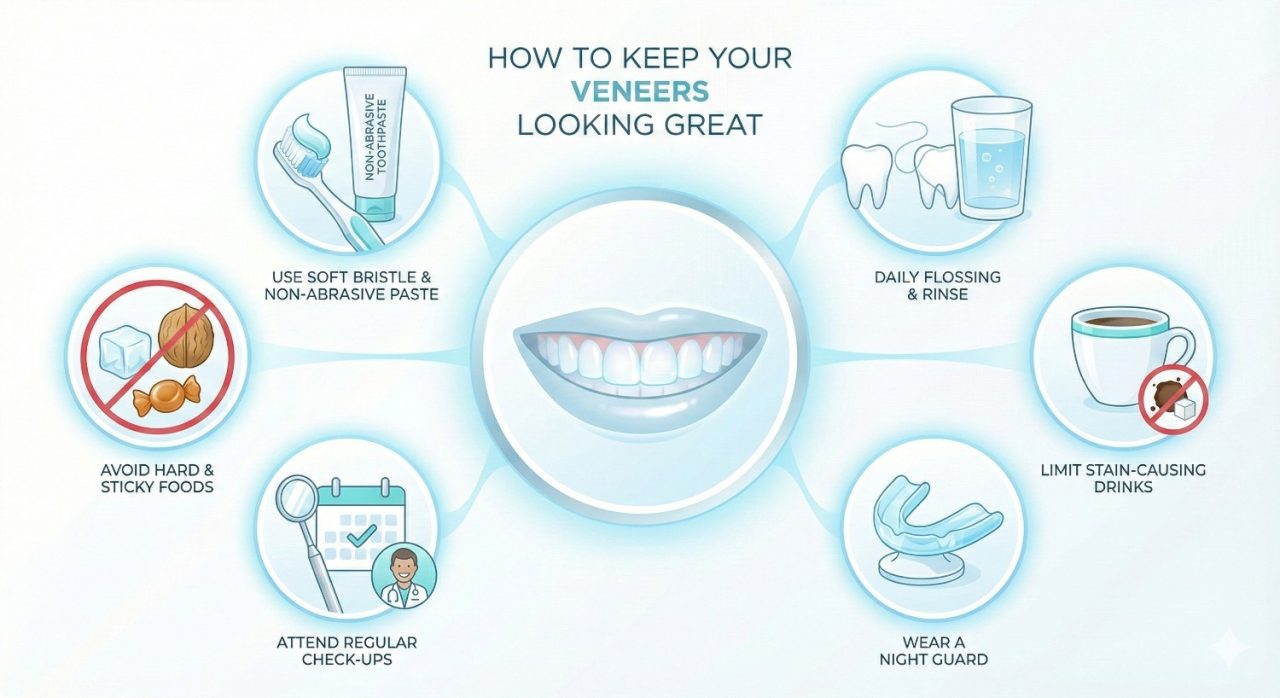
At Global Dental, we give each of our veneer patients a personalised care plan and check-up schedule. With gentle care and smart habits, you can enjoy a bright, natural-looking smile for many years. 
 

Frequently Asked Questions About Veneers

How long do veneers last before they need replacement? 

Porcelain veneers usually last about 10 to 15 years with good care. Some may stay strong beyond that if you maintain oral hygiene and avoid habits that stress the teeth.  

Composite veneers, while cheaper and faster to install, tend to last around 5 to 7 years on average. 

Are veneers safe, or will they damage my natural teeth?

When professionally placed, veneers are safe. They cover just the front surface and bond to your existing tooth. The underlying enamel still needs proper care. With routine brushing and flossing, the risk of decay under veneers remains low. 

Will I feel pain or sensitivity after getting veneers? 

Most patients feel little to no pain. Mild sensitivity or gum tenderness is common in the first few days, especially around edges or newly bonded teeth. That usually fades quickly. 

Do veneers stain as normal teeth do? 

Porcelain veneers resist stains better than natural teeth, but they are not immune. Dark foods, tea, coffee or smoking over time can affect the surface or adhesive margins. Rinsing your mouth after such foods helps maintain brightness. 

Can I enjoy my usual foods and drinks after getting veneers? 

Yes. You can enjoy regular meals. Just avoid biting directly on hard items like ice, nuts, or hard candy. Using teeth as tools, for example, to open bottles, is not advised because that stress can chip or loosen veneers.  
 
How often should I visit a dentist after getting veneers? 

To maintain healthy teeth and gums, we recommend seeing your dentist twice a year. During these visits, we clean, inspect veneers for wear or damage, and check gum health. It helps prolong the life of veneers.  

Thinking about Veneers? Let’s Talk 

If you’ve been wondering what veneers are and whether they suit your dental needs, feel free to contact us at Global Dental. We’ll examine your teeth carefully, explain all your optionsveneers or alternativesand help you decide what’s best for a healthy, beautiful smile. 

Leave a Reply

Your email address will not be published. Required fields are marked *

What are Veeners

Most people dream of a bright, confident smile, but dental issues like discoloration, chips, or gaps often get in the way. That’s where veneers come in. 
 

Custom-designed thin shells called veneers are applied to your teeth to correct cosmetic imperfections and enhance your smile. Veneers are used to cover stains, hide chips, close small gaps, or reshape uneven teeth. Many patients get porcelain veneers because they look natural and resist stains better than ordinary whitening treatments. 
 

Even with regular brushing and care, certain issues, such as persistent staining, enamel wear, or minor damage, don’t always respond well to whitening or bonding alone. In such cases, veneers offer a durable, aesthetic solution that combines strength, appearance, and convenience.  
 

At Global Dental, we aim to help you understand exactly what veneers are, who they suit, and what to expect before and after treatment. We believe in honest advice. Veneers can transform your smile, but they also require commitment and proper care for long-lasting results. 
 

Suppose you’re curious whether veneers suit your teeth, especially if you live in Karachi and want a local, trusted dental clinic. In that case, this guide will walk you through everything with clarity and honesty. 

What Veneers Are and How They Work

Ultra-thin veneers made from porcelain or composite resin cover the front of your teeth, creating a naturally polished smile. In addition to enhancing appearance, veneers shield the underlying tooth from minor wear, discoloration, and staining. The dentist carefully shapes your teeth, takes impressions, and then attaches the veneers using a strong dental adhesive. 
 

Porcelain veneers are popular because they mimic natural tooth enamel, resist discoloration, and can last 10–15 years with proper care. Composite veneers, while slightly less durable, offer a quicker, often more affordable option. Both types are designed to fit your teeth seamlessly, giving you a natural, even smile. 
 

At Global Dental, we guide patients through every step: from understanding which teeth can benefit most, to preparing teeth, and finally, achieving a precise fit and finish. Our goal is a smile that looks natural, feels comfortable, and strengthens overall oral health

Types of Veneers

Porcelain Veneers

High-quality ceramic veneers that look natural and resist staining. They offer long-lasting results and superior strength.

  • 10–15 years lifespan
  • Excellent stain resistance
  • Ideal for deep discoloration & chipped teeth

Composite Veneers

Tooth-colored resin applied in a single visit. A more affordable option with easy repair and a fast procedure.

  • 5–7 years lifespan
  • Budget-friendly & quick
  • Best for minor shape/colour corrections

Who Gains Most from Veneers 

Not everyone needs veneers, but many people see dramatic improvements when they match the right conditions. At Global Dental, we help patients understand if veneers fit their dental health and lifestyle. 
 

When Veneers Make Sense 

Veneers are a good option when teeth have cosmetic or minor structural issues that don’t respond well to whitening, bonding, or braces. Common cases include: 

  • Teeth stained deeply by age, tetracycline, excessive fluoride or past root canal treatments that resist normal whitening.  
  • Teeth that are chipped, cracked, worn down or have minor enamel erosion, veneers cover and protect the tooth front while restoring appearance.  
  • Teeth with small gaps, irregular shape, uneven size, or mild misalignment, veneer shells can mask gaps and create a uniform, balanced smile.  
  • For front or visible teeth where appearance matters the most, veneers give a natural, enamel-like finish with good stain resistance, ideal for aesthetic smile improvements.  
     

When Veneers May Not Be Right 

Even though veneers help many, there are conditions when they’re not the best choice. We check carefully for: 

  • For active tooth decay or gum disease, veneers require a healthy foundation; underlying problems must be addressed first.  
  • Very worn-down or weak teeth with too little enamel, bonding strength may be poor, increasing the risk of veneer failure.  
  • Veneers can chip or become loose when people grind, clench, or place excessive pressure on their teeth.  
  • Severe bite or jaw alignment problems, or major orthodontic needs, in such cases, orthodontic treatment (braces, aligners) or crowns may be more appropriate than veneers.  
     

What We Evaluate at Global Dental in Karachi 
 

When you visit us, we don’t just offer veneers automatically. We perform a full dental check, examining gum health, enamel strength, bite and jaw alignment, and oral habits. Based on that, we advise whether veneers suit you or if alternative treatments fit better. 
 

Good cosmetic dentistry starts with an honest diagnosis and patient safety first. If veneer treatment makes sense, we walk you through expected outcomes, maintenance, potential risks, and long-term care. 

How Veneers Are Placed – Step by Step

Understanding what happens during veneer placement helps patients feel comfortable, confident, and fully prepared. At Global Dental in Karachi, we focus on precision, comfort, and long-term results.

1. Initial Consultation and Smile Assessment

We evaluate your teeth, gums, and bite, discuss goals, take photos, and sometimes create a mock-up to predict results. This ensures veneers meet both cosmetic and functional needs.

2. Preparing the Tooth

A thin layer of enamel is carefully reduced so veneers fit naturally without affecting the bite. Local anesthesia makes the process comfortable.

3. Impressions and Shade Matching

We take precise dental impressions and select the perfect shade. Custom veneers are crafted in the lab for a natural, seamless match.

4. Temporary Veneers

Temporary veneers protect teeth and maintain appearance while permanent veneers are being created. This helps patients adjust before final bonding.

5. Bonding the Veneers

Teeth are cleaned, etched, and bonded with a special dental adhesive. A curing light hardens the veneer securely in place.

6. Final Adjustments and Polishing

We check bite, fit, and aesthetics, make small adjustments, and polish the veneers for a smooth, natural finish. Follow-ups ensure ongoing oral health.

How to Keep Your Veneers Looking Great for Years

At Global Dental, we give each of our veneer patients a personalised care plan and check-up schedule. With gentle care and smart habits, you can enjoy a bright, natural-looking smile for many years. 
 

Frequently Asked Questions About Veneers

How long do veneers last before they need replacement? 

Porcelain veneers usually last about 10 to 15 years with good care. Some may stay strong beyond that if you maintain oral hygiene and avoid habits that stress the teeth.  

Composite veneers, while cheaper and faster to install, tend to last around 5 to 7 years on average. 

Are veneers safe, or will they damage my natural teeth?

When professionally placed, veneers are safe. They cover just the front surface and bond to your existing tooth. The underlying enamel still needs proper care. With routine brushing and flossing, the risk of decay under veneers remains low. 

Will I feel pain or sensitivity after getting veneers? 

Most patients feel little to no pain. Mild sensitivity or gum tenderness is common in the first few days, especially around edges or newly bonded teeth. That usually fades quickly. 

Do veneers stain as normal teeth do? 

Porcelain veneers resist stains better than natural teeth, but they are not immune. Dark foods, tea, coffee or smoking over time can affect the surface or adhesive margins. Rinsing your mouth after such foods helps maintain brightness. 

Can I enjoy my usual foods and drinks after getting veneers? 

Yes. You can enjoy regular meals. Just avoid biting directly on hard items like ice, nuts, or hard candy. Using teeth as tools, for example, to open bottles, is not advised because that stress can chip or loosen veneers.  
 
How often should I visit a dentist after getting veneers? 

To maintain healthy teeth and gums, we recommend seeing your dentist twice a year. During these visits, we clean, inspect veneers for wear or damage, and check gum health. It helps prolong the life of veneers.  

Thinking about Veneers? Let’s Talk 

If you’ve been wondering what veneers are and whether they suit your dental needs, feel free to contact us at Global Dental. We’ll examine your teeth carefully, explain all your optionsveneers or alternativesand help you decide what’s best for a healthy, beautiful smile.